How to Choose the Best Laser Welder for Your Business Needs?
Choosing the right Laser Welder for your business can be a daunting task. With numerous options available, making an informed decision is crucial. A recent report by the International Laser Institute notes that the market for laser welding technology is expected to reach $5 billion by 2025. This highlights the growing importance of investing in quality machines.
Industry expert Dr. Emily Chen, a leading authority on laser technology, states, "Selecting the appropriate laser welder can significantly enhance productivity." Her insight underscores the need for businesses to carefully evaluate their specific demands. Various factors, like material type and thickness, should guide your choice.
Despite advancements in laser welding, challenges persist. Many businesses overlook maintenance needs, potentially leading to increased costs and downtime. Understanding your requirements while acknowledging potential pitfalls can lead to a more satisfying investment in a Laser Welder.

Understanding Your Business Requirements for a Laser Welder
When selecting a laser welder, understanding business needs is crucial. Consider the types of materials you will be working with. Different materials require different laser types and settings. For example, aluminum welding may demand a specific wavelength to achieve optimal results. Analyze your projects closely to determine these requirements.
Tip: Make a list of the materials you frequently use. This will help narrow down your options effectively.
Evaluate the scale of your operations. Small businesses may not require high-power machines, while larger operations might benefit from advanced features and faster processing. Assess how often you will use the welder. Investing in a more robust machine makes sense for frequent tasks.
Tip: Gauge your production volume. This can guide your choice of machine size and power.
Think about training for your team. The best welder won’t be effective if your staff lacks the skills to operate it. Ensure you choose a model that offers good training resources. Reflect on the potential learning curve. It's wise to plan for this when selecting your equipment.
Tip: Evaluate available training options before purchasing. This ensures a smooth transition and effective use of your new equipment.
Key Features to Consider When Selecting a Laser Welder
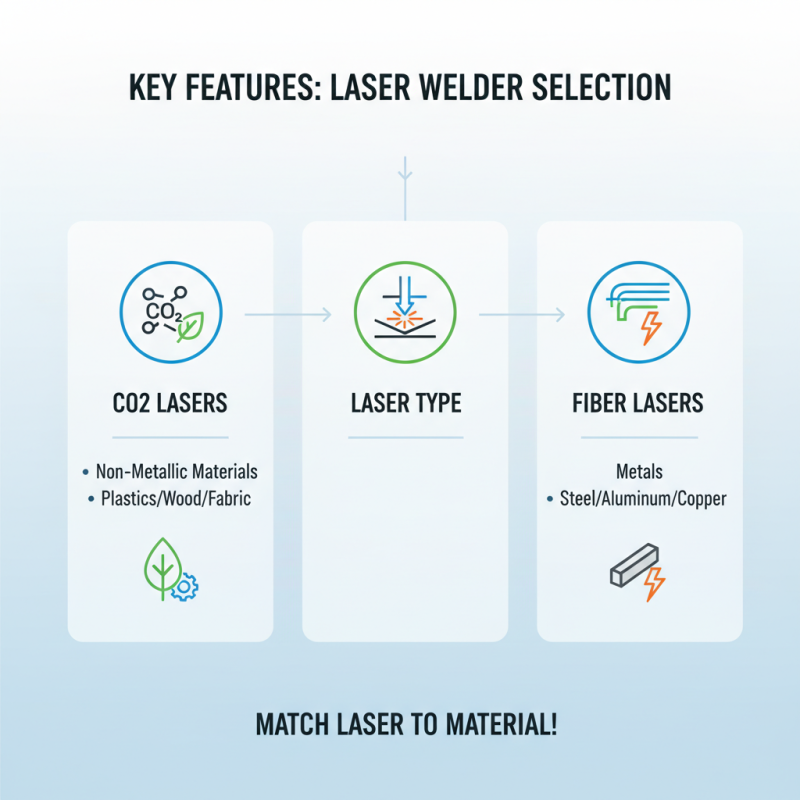
When selecting a laser welder, several key features deserve special attention. One crucial aspect is the laser type. Different lasers serve various applications. CO2 lasers are excellent for non-metal materials, while fiber lasers often excel with metals. Understanding the material you plan to work with can significantly impact your choice.
Another important feature is the power output. Higher wattage allows for faster welding speeds and thicker materials. However, too much power can lead to burn-through, especially on thin sheets. Balancing power and material thickness is essential. It's vital to evaluate your specific welding requirements carefully.
Additionally, consider the user interface. A simple, clear interface can enhance productivity, especially if multiple operators will use the machine. Look for programmable settings that allow for customization. This flexibility can reduce trial and error, saving time and resources. Investing in a user-friendly design may seem minor, but it can lead to significant efficiency gains. Reflecting on operational needs and potential growth can help identify the best machine for your business.
Comparing Different Types of Laser Welders for Various Applications
When choosing a laser welder, consider the specific requirements of your applications. Various types of laser welders excel in different areas. For instance, fiber lasers are known for their high speed and precision, making them ideal for thin materials. They offer exceptional beam quality, leading to cleaner welds with minimal distortion. On the other hand, YAG lasers are useful for thicker materials and provide deeper penetration.
Another important factor is power output. High-power lasers are essential for industrial applications, where welding thick metals is common. According to a recent industry report, over 60% of manufacturers reported reduced operational costs after switching to high-power laser welding. However, remember this comes with higher initial investment costs.
Tips: Before purchasing, analyze your production volume and material types. It's also wise to consult with experts to assess long-term needs. Take time to evaluate your existing processes. In some cases, adapting current techniques may be a more cost-effective solution than investing in new equipment.
Comparison of Laser Welders by Welding Speed
This bar chart illustrates the welding speed of various types of laser welders commonly used in manufacturing. Understanding the capabilities of each type can help businesses select the best laser welder for their specific needs.
Budgeting for a Laser Welder: Cost vs. Value Analysis
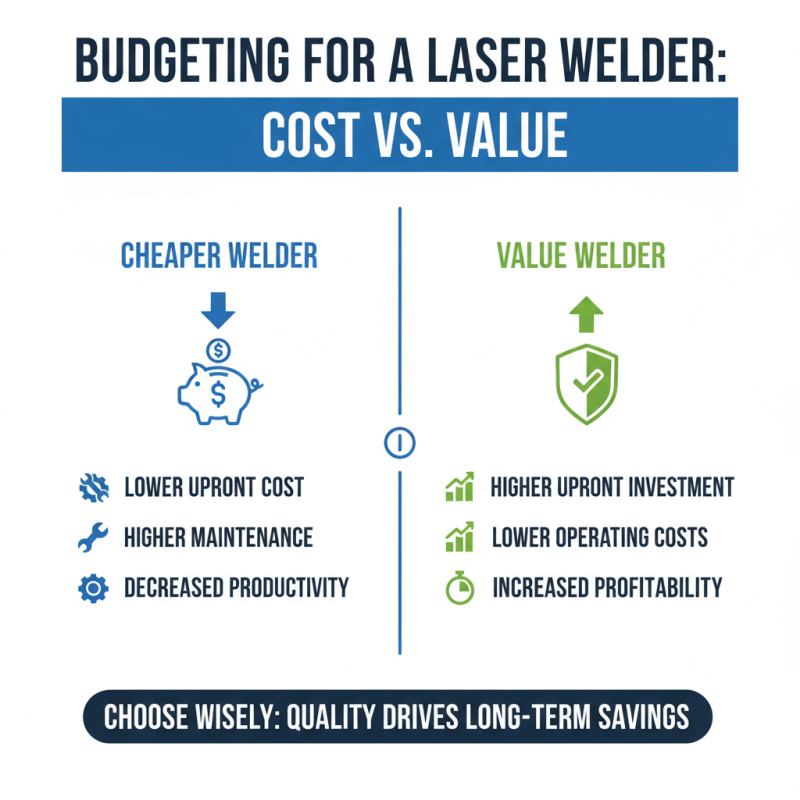
When budgeting for a laser welder, it’s crucial to analyze cost versus value. A cheaper welder may save money upfront, but it can have hidden costs. Lower quality welders often lead to higher maintenance expenses and decreased productivity.
Consider the materials you'll be working with. High-quality welders can handle various metals, offering flexibility. This helps reduce the need for multiple machines. However, investing in more expensive equipment requires careful financial planning. Understand your business needs before making a purchase.
Evaluate the total cost of ownership. This includes initial costs, maintenance, and electricity consumption. An expensive, durable model can save money in the long run. Seek out reliable resources and consult experts. Invest time in research to ensure a wise decision. The balance between upfront costs and long-term value is essential for growth.
Evaluating Laser Welder Brands and Customer Support Options
When selecting a laser welder, evaluating brands and their customer support is critical. A comprehensive industry report highlights that 75% of users prioritize after-sales service when choosing equipment. Brands with strong technical support often score higher in user satisfaction. Reliable support can make a significant difference. If a welder malfunctions, timely assistance is crucial to minimize downtime.
Research indicates that businesses investing in equipment with robust customer service experience 30% fewer operational issues. This is often due to better training resources and troubleshooting assistance. Look for brands that offer user manuals, video tutorials, and responsive helplines. A well-supported machine not only serves its purpose but also enhances productivity.
Beyond functionality, consider community feedback on service experiences. User reviews can reveal potential pitfalls, like slow response times or inadequate training. Choosing a welder involves more than specifications. Balancing performance with dependable customer support is essential for long-term success in your business.
How to Choose the Best Laser Welder for Your Business Needs?
| Laser Welder Type |
Power Output (W) |
Welding Speed (m/min) |
Material Compatibility |
Customer Support Rating |
| Fiber Laser Welder |
1000W |
2.5 |
Metal (Steel, Aluminum) |
4.5/5 |
| CO2 Laser Welder |
1500W |
2.0 |
Wood, Plastic, Glass |
4.0/5 |
| Nd:YAG Laser Welder |
300W |
1.0 |
Precious Metals |
4.2/5 |
| Portable Laser Welder |
500W |
1.5 |
Steel, Aluminum, Copper |
4.3/5 |

 Press Brake
 CNC Laser
 Industry Robot
 Plate Rolling Machine
 Tube Bending Machine
 Lathe and Machining Center
 Machine Protection Products